
Chapter I
Wood Selection
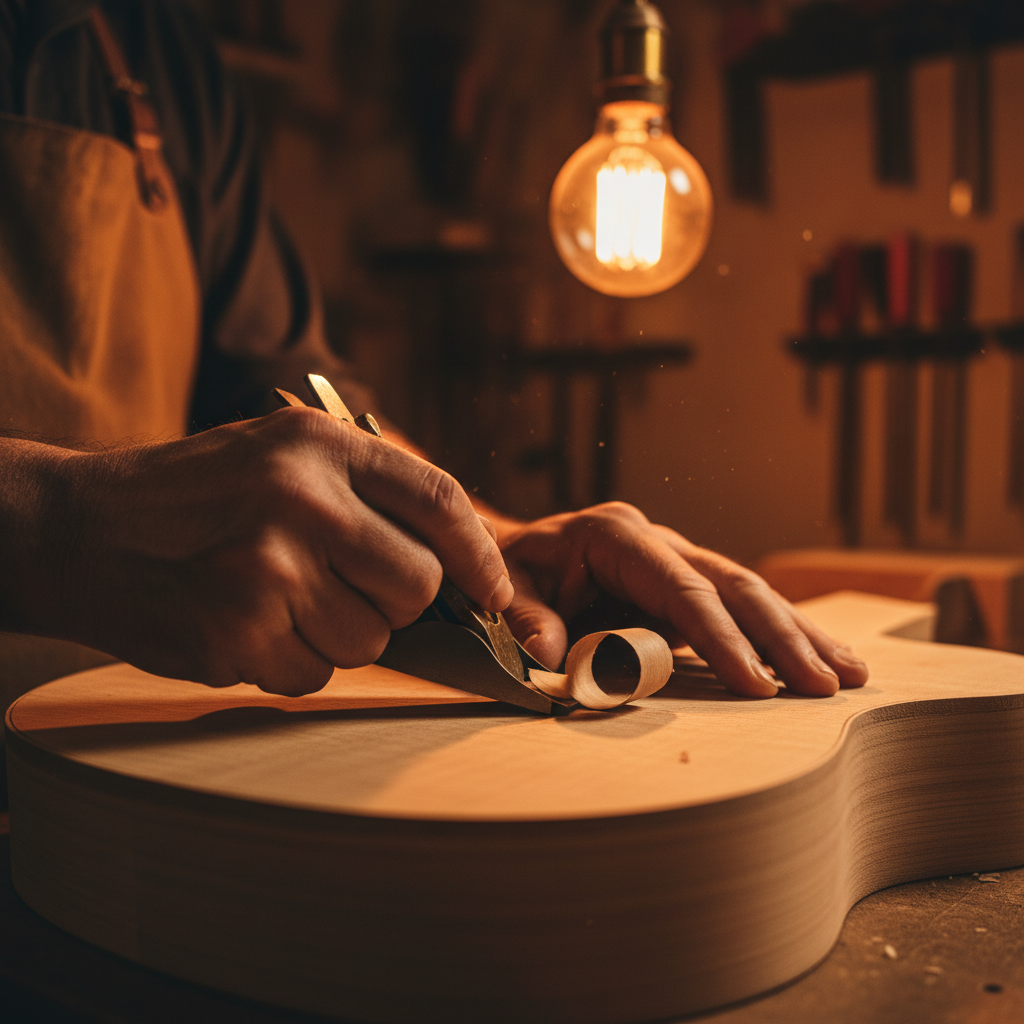
A guitar begins not at the bench but in the timber yard, sometimes years before the commission arrives. I keep a small inventory of seasoned tops — Sitka, Engelmann, Adirondack — each one tapped, listened to, set aside until the right player asks for it.
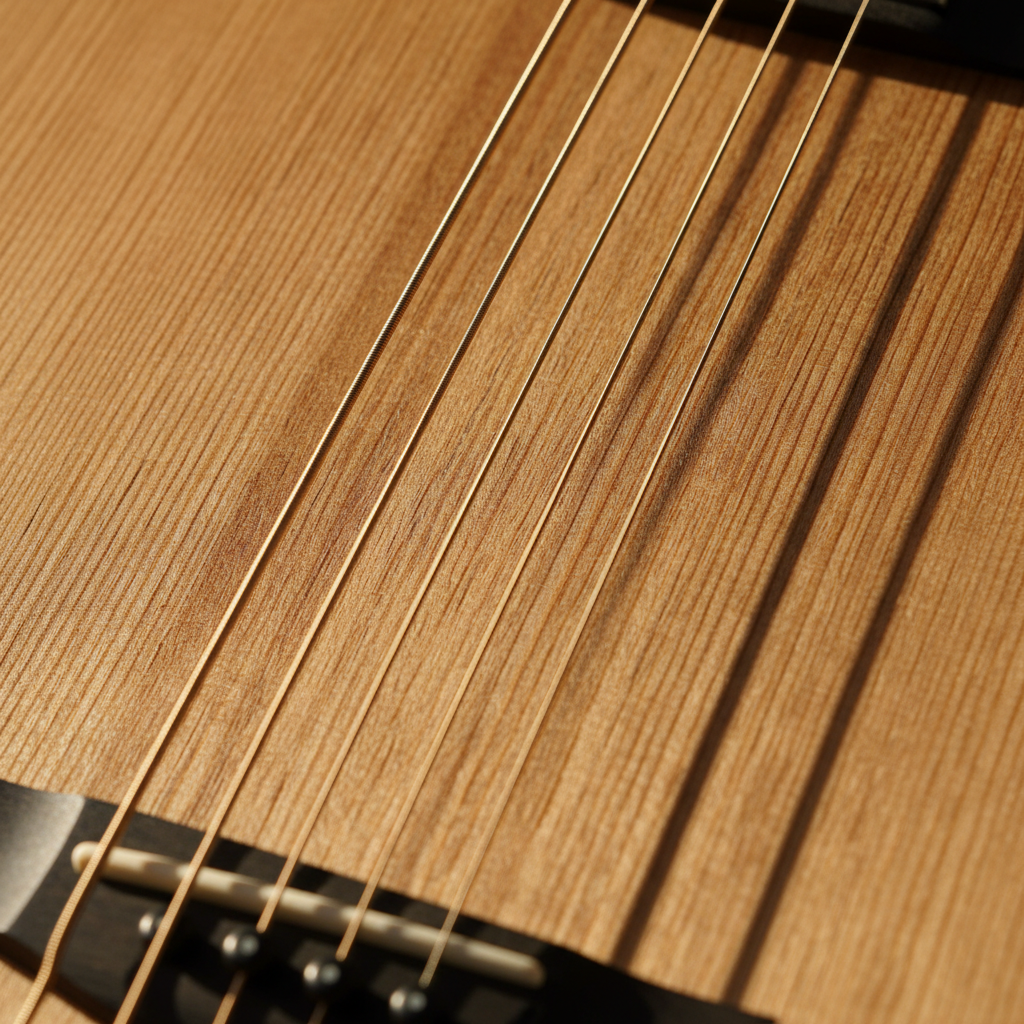
Sitka Spruce
"The grain lines in old-growth Sitka run so tight you can count forty rings in an inch. That density is where the projection comes from."
East Indian Rosewood
Back & sides
Rosewood is the great sustainer. Its density keeps lows from blooming into mud — it separates the bass frequencies the way a good EQ cannot. Fingerpickers who need each note to speak clearly almost always end up here.
Honduran Mahogany
Back & sides — the songwriter's wood
Mahogany cuts the lows and pushes the mids. Fingerpickers love it. Singer-songwriters who need their guitar to sit in a mix without fighting the voice almost always end up here. It records beautifully without touching a knob.
"I've turned down commissions because the wood wasn't ready. You can't rush a top that needs another winter."
— On sourcing, 2024
Chapter II
Bracing & Voicing
The top is the voice. Everything else — body, neck, bridge — is amplification and shaping. The braces underneath decide whether that voice whispers or carries to the back of a room.
Hand-Carved Fan Brace
The classical tradition, adapted for steel strings. Fan braces let the top vibrate freely across its full width — every frequency gets equal permission to speak. The result is a complex harmonic spectrum: overtones that bloom, a midrange that sings, and a sustain that doesn't decay cleanly but fades like a voice.
Best for
Fingerstyle, classical-influenced, intimate venues
Scalloped X Brace
The X cross-braces the top diagonally, stiffening it against the tension of steel strings while the scalloping — shaving mass from the braces in precise arcs — lets the top flex at the frequencies that matter. The sound is focused, powerful, and immediate. Flatpickers need this: attack that translates to the last row.
Best for
Flatpicking, bluegrass, projection-first builds
What tap-tuning actually is
You knock on the top with your knuckle — the same way you'd knock on a door — and you listen. A seasoned top has a Chladni mode: a frequency at which it resonates cleanly, predictably. I'm looking for the main air mode (the low thump) and the top's main resonance (the ring).
I shave the braces — sometimes removing less than a tenth of a millimeter — until those modes fall where I want them relative to the key the player favors. A guitar built for a player who lives in open-G gets a different voicing than one built for standard-tuned jazz. The wood doesn't know the difference. I have to tell it.
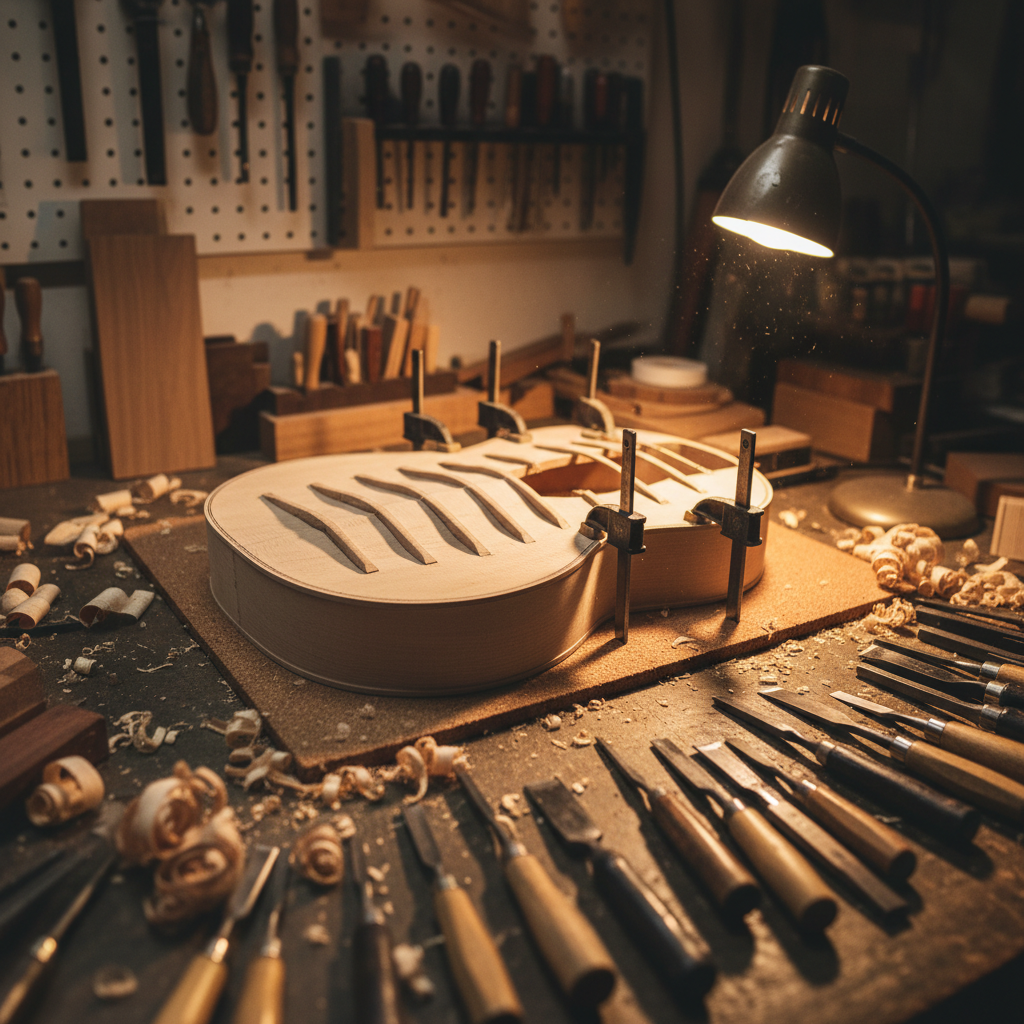
±0.1mm
brace shaving precision
Chapter III
Neck Geometry
The neck is the instrument's handshake. A player knows in the first four bars whether a guitar belongs to them — and that judgment happens entirely in the left hand, before the sound even registers.
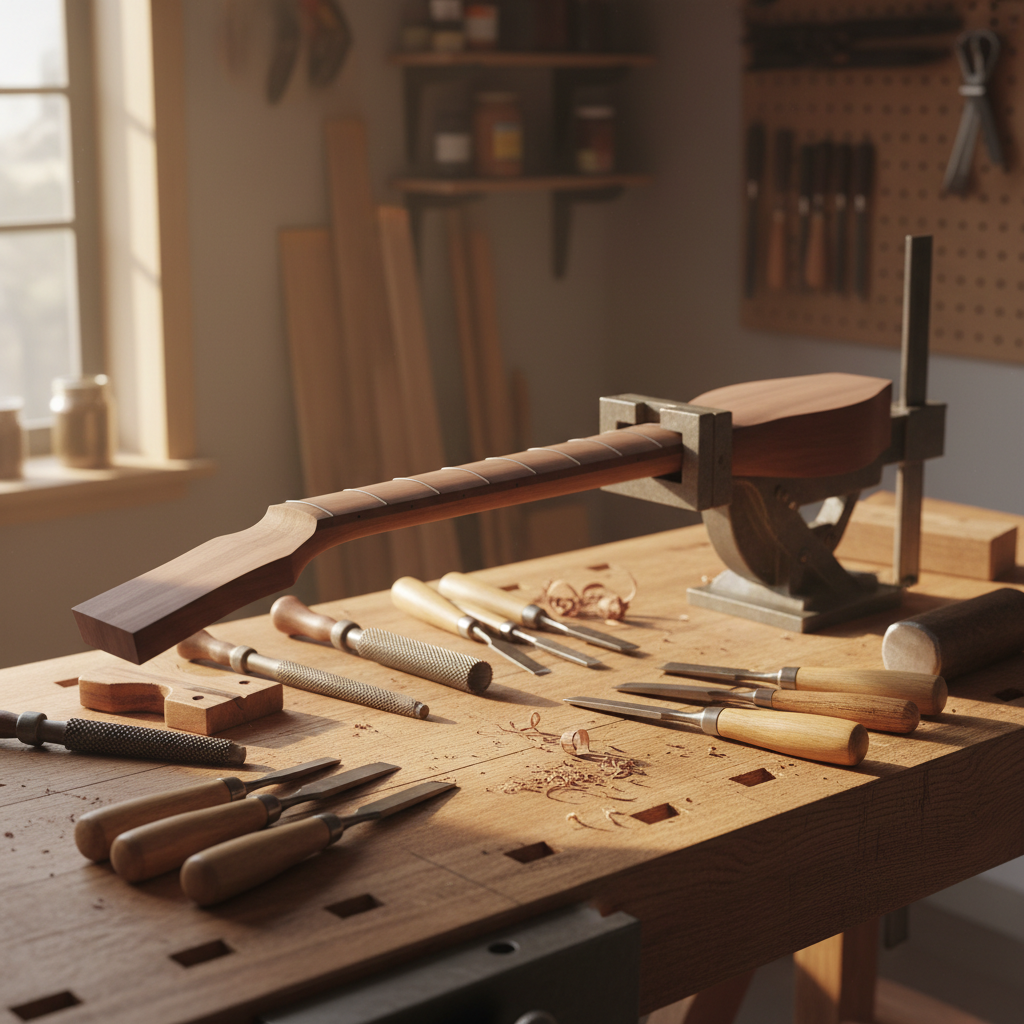
"I fit the neck to the player's hand before I fit it to the body."
The Bone Nut
Every guitar leaves with a hand-cut bone nut — filed slot by slot to the string gauge and action preference of the player. My Vermont specialist shapes and fits each one. A plastic nut costs $4. A bone nut costs an afternoon and a steady hand. The difference is audible on the open strings.
Sourced from Vermont
Hand-carved, never slotted by machine
Every measurement is a conversation
These aren't defaults — they're starting points for the consultation.
Fingerpickers favor wider; flatpickers go narrow
Fitted to hand anatomy, not catalog standards
Longer = more tension, more treble clarity
Compound radius rewards both chord and single-note work
Chapter IV
Finishing
Finish is the last thing that goes on and the first thing people comment on. But its real job is acoustic, not cosmetic — the wrong finish can damp a top into silence. I use French polish on most instruments, and I bring in Elena Vasquez from Tucson when the commission demands it.
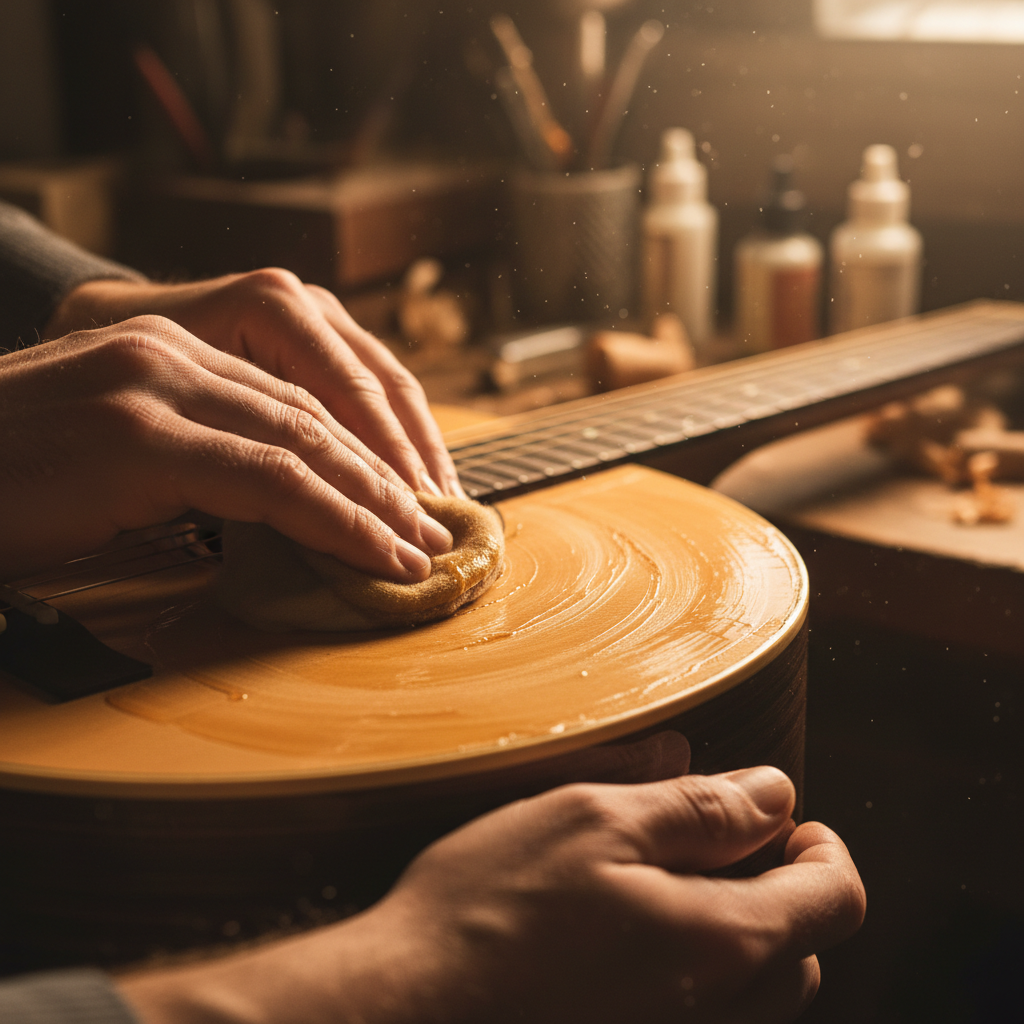
French Polish · Shellac
French Polish
Dissolved shellac — a resin secreted by lac beetles — applied by rubber pad in dozens of thin coats, each one burnished into the last. The total film thickness is less than a human hair. The top vibrates as if it were unfinished. It's the most demanding finish to apply and the most rewarding to hear.
Elena Vasquez, Tucson AZ — French polisher, 22 years. Works exclusively on commissioned instruments.
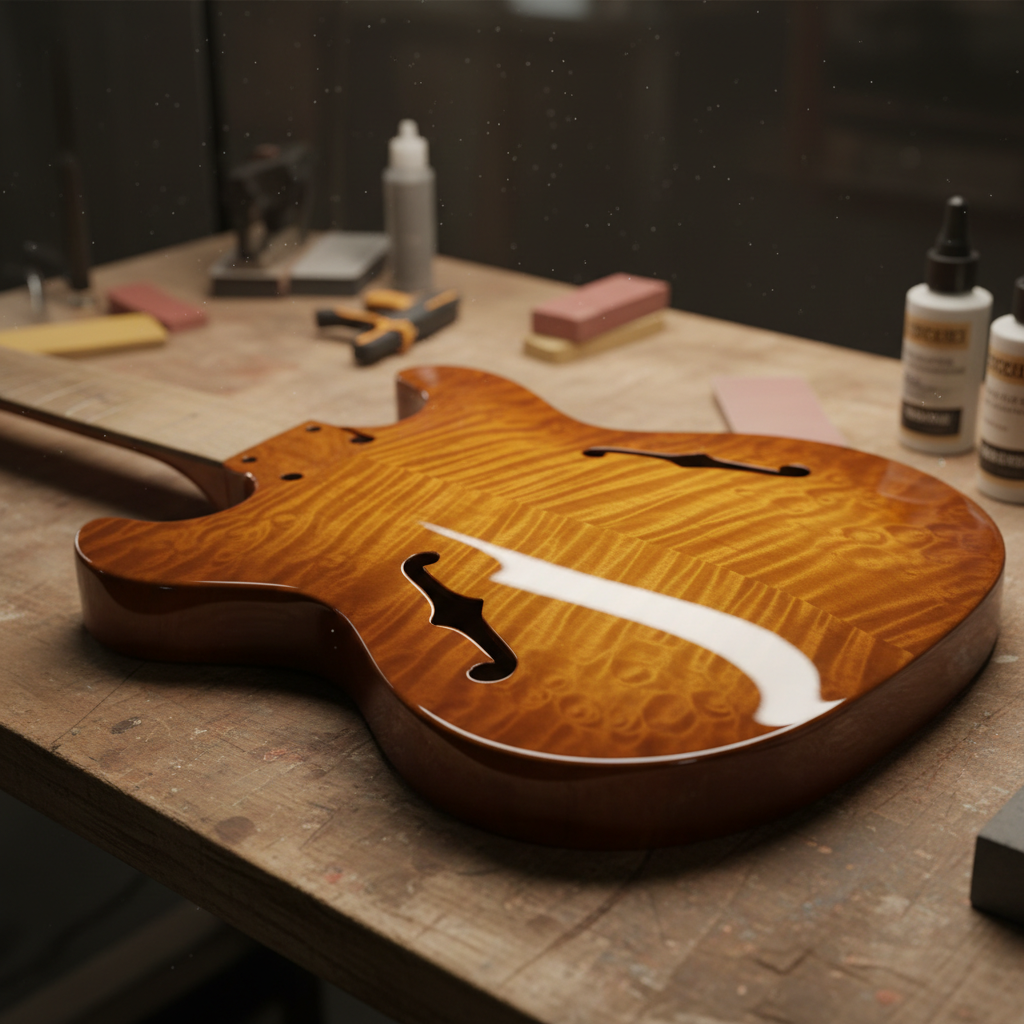
Nitrocellulose Lacquer
Nitrocellulose Lacquer
The choice for players who want durability alongside acoustics. Nitro continues to cure and thin over decades — a forty-year-old nitro guitar sounds different than a new one, and usually better. I apply it in a temperature-controlled spray environment and buff each coat by hand.
Preferred for heirloom builds intended to age through generations

The Destination
Two hundred hours of craft, played on a dark stage. That's where the instrument earns its name.
The Workshop
One Bench. Seasonal Specialists.
The shop is mine alone — which means every decision, every shaving, every tap-test is mine. I bring in two specialists whose craft exceeds what I can offer in-house, and I've worked with both long enough to trust them completely.
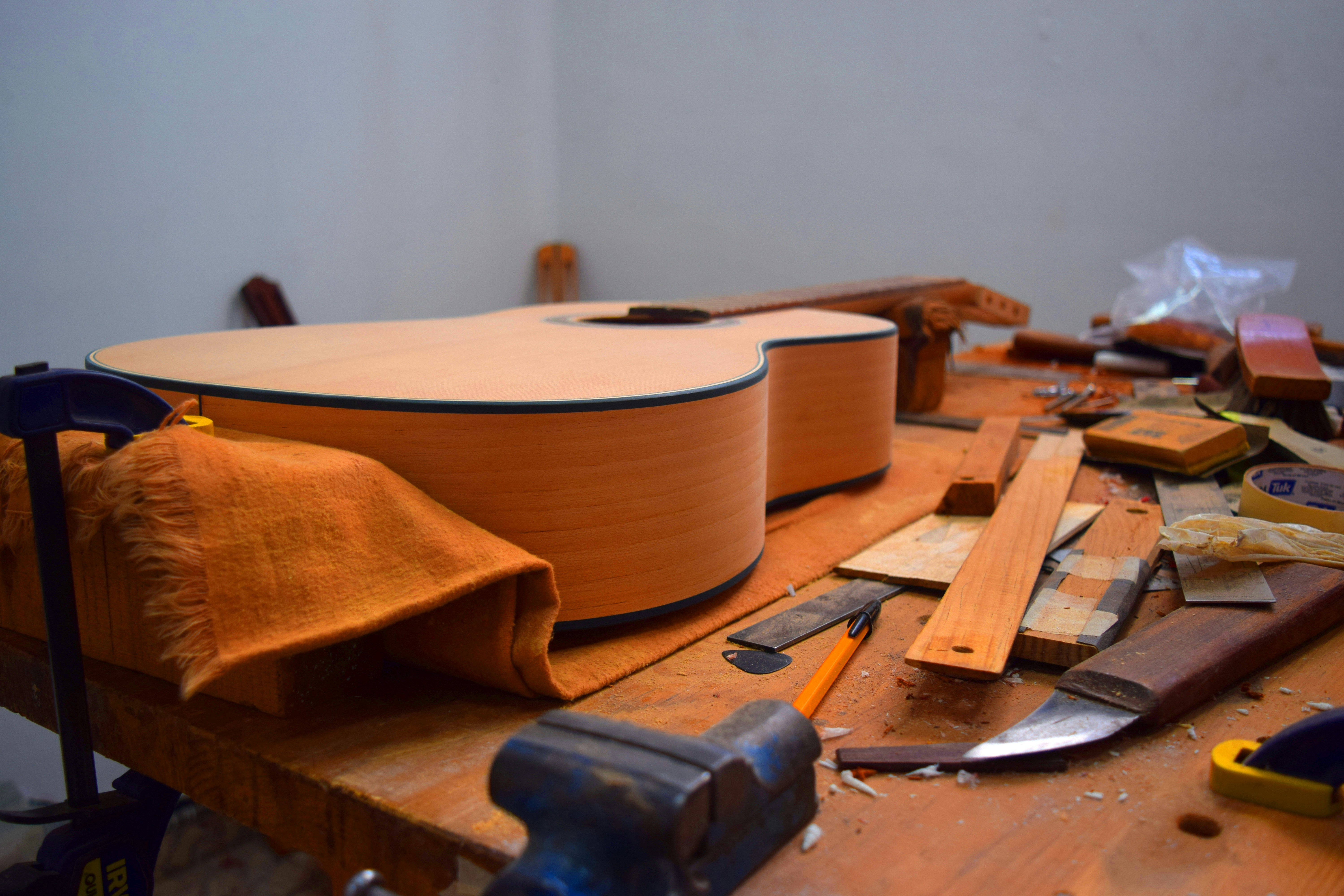
~8
instruments per year
Why one bench matters
I build eight instruments a year, sometimes fewer. That's a deliberate constraint, not a capacity problem. Each commission gets the full weight of my attention — I know the player's style, I've heard their current guitar, I understand what they're asking the wood to do that it can't do yet.
Factory guitars are optimized for the median player. I build for the specific one standing in front of me. Those are incompatible production philosophies.
18+
Years building
200+
Hours per build
40+
Instruments placed
The Seasonal Specialists

Elena Vasquez
French PolisherTucson, AZ
Twenty-two years applying shellac to commissioned instruments. Works exclusively on builds where the player has requested French polish finish. Handles three to four guitars per year.
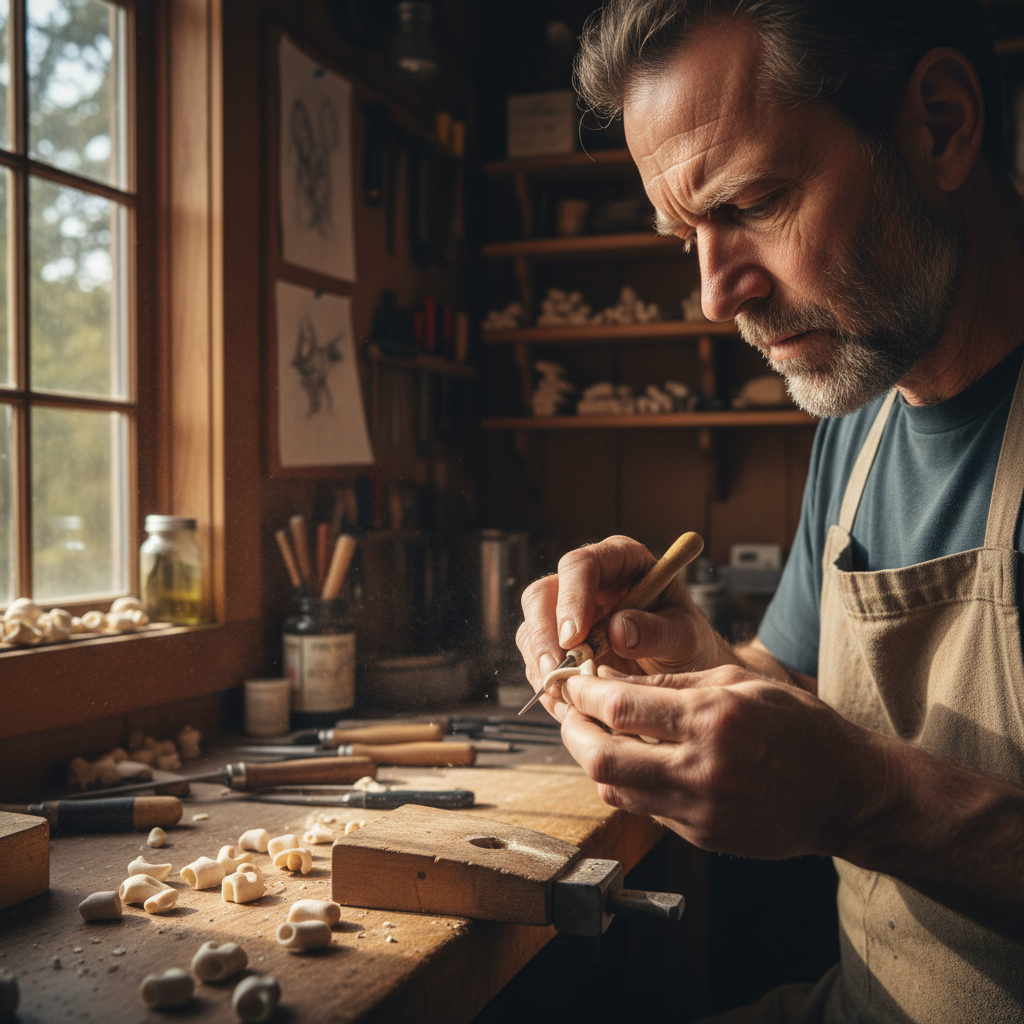
James Whitfield
Bone-Nut CarverBrattleboro, VT
Former dental technician who retooled for lutherie in 2009. Files every slot by hand under a loupe. His nuts have gone on instruments played at the Grand Ole Opry and the Village Vanguard.
The Waiting List
Describe Your Dream Guitar
The current wait is 14–18 months. That's not a sales tactic — it's the arithmetic of eight instruments a year and a full order book. The conversation starts here.
How do you play?
This shapes everything — the bracing, the scale length, the neck profile.
The Buyer's Guide to Commissioning a Handbuilt Guitar
28 pages covering everything from first contact to final setup — what to ask, what to expect, and how to know you're working with someone who actually knows what they're doing.
How to evaluate a luthier's work before you commit
The questions every commission should answer
Understanding lead times and deposits
What "voicing" actually means for your music